
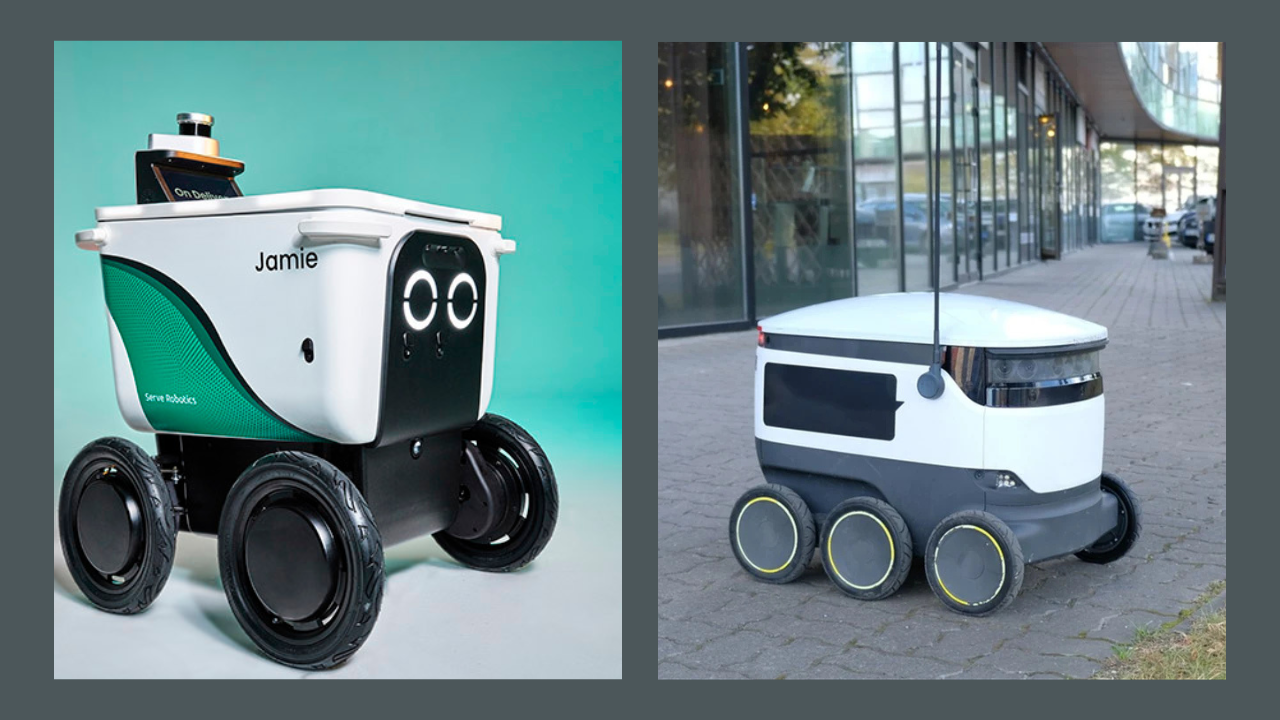
Introduction to Serve Robotics
Serve Robotics is a young but fast-growing company operating in the autonomous delivery and robotics space, an area attracting growing interest as cities and businesses seek quicker, cleaner, and more reliable ways to handle last-mile deliveries. Established in 2017, the company focuses on developing and operating autonomous robots that travel along sidewalks to deliver food, groceries, and small parcels in busy urban areas. By prioritizing safety, operational efficiency, and environmentally responsible design, Serve Robotics positions itself as a company focused on practical innovation and the evolving needs of modern urban logistics.
Since going public, Serve Robotics has attracted interest from both individual investors and institutional investors seeking exposure to robotics, artificial intelligence, and automation-focused businesses. As the company expands its operations and visibility grows, conversations around Serve Robotics itself, along with its share price and overall stock performance, have become increasingly frequent across financial markets and investor communities.
Serve Robotics Business Model and Market Position
Serve Robotics follows a delivery-as-a-service approach rather than a traditional product sales model. Instead of selling its robots, the company keeps ownership of the fleet and manages day-to-day operations while working alongside delivery platforms, restaurants, and local merchants. This setup creates ongoing revenue tied to how often the robots are used, the number of deliveries completed, and the length of service partnerships. By keeping its robots on sidewalks rather than public roads, Serve Robotics also sidesteps many of the regulatory hurdles and infrastructure requirements that typically slow down fully autonomous vehicles.
Serve Robotics’ market position is influenced by several shifting trends, including the push for contactless delivery, higher labor costs in traditional courier services, and growing awareness of sustainable logistics. Together, these forces have helped fuel investor interest, with the stock price of Serve Robotics often reacting to updates on new partnerships, fleet expansion, and other operational milestones announced by the company.
Serve Robotics Share Price Overview
Since going public, the Serve Robotics share price has fluctuated, a pattern commonly seen in early-stage technology companies. Much of this movement is tied to expectations around future growth, which can quickly push valuations higher or lower. In a relatively short period, the stock has traded across a wide range, reacting to company updates, shifts in investor sentiment, and broader trends affecting technology and automation-focused stocks.
There have been moments when the stock climbed quickly on the back of major announcements, including strategic investments, progress in robot deployments, or increased attention from market analysts. At other times, the price has retreated as uncertainty set in, investors locked in gains, or expectations shifted. This back-and-forth reflects both the speculative nature of early-stage robotics businesses and the sustained curiosity investors have about Serve Robotics’ long-term potential.
Serve Robotics Stock Price Drivers
Several key elements shape the serve robotics stock price, with fleet expansion among the most closely watched. Investors closely monitor how many robots are deployed, how often they deliver, and whether those operations translate into meaningful revenue. Reaching new deployment milestones is usually viewed as a sign that the business is moving closer to full commercialization and sustainable scale.
Partnership growth is another significant influence on the stock’s movement. When Serve Robotics aligns with established delivery platforms or well-known merchants, it helps reinforce confidence in both the technology and the underlying business model. News of these collaborations can trigger immediate market reactions as investors rethink the company’s growth prospects. Beyond company-specific updates, overall sentiment around artificial intelligence, robotics, and automation also affects the stock price, as Serve Robotics is often viewed alongside other fast-growing technology names in the same space.
Wider economic conditions also have a meaningful impact. Shifts in interest rates, changing appetite for risk in the stock market, and investor movement between growth and value stocks can all magnify price swings, sometimes independent of how the company itself is performing. As a result, Serve Robotics’ share price can fluctuate even during periods without major announcements or operational changes.
Latest Serve Robotics News and Developments
Recent coverage of Serve Robotics has focused on steady operational growth and analysts’ interpretations of that progress. The company has been expanding its autonomous delivery fleet, which many see as a clear step toward broader acceptance of its technology. Updates on successful rollouts at new city locations have strengthened confidence that sidewalk-based delivery robots can operate reliably in real-world urban settings.
Analyst coverage has also influenced the market’s view of the company. Supportive assessments highlighting long-term growth prospects, the ability to scale revenue, and the size of the broader opportunity have helped reignite investor interest on occasion. At the same time, more measured opinions that point to ongoing losses, execution challenges, and uncertain profitability timelines serve as a reminder that Serve Robotics is still very much in a building and expansion stage.
Media and industry commentary often place Serve Robotics within the broader automation landscape, framing it as part of a wider shift toward AI-powered logistics. This perspective presents the company not as a standalone experiment, but as part of a broader transformation in how deliveries and urban logistics are expected to evolve.
Serve Robotics Earnings Performance
Serve Robotics’ financial results mirror what is typical of young, fast-growing technology companies. As its robot fleet grows and partnerships become more established, revenue continues to rise, yet the business has not yet reached profitability. Earnings reports typically highlight year-over-year sales growth alongside ongoing losses, driven mainly by continued spending on research and development and on infrastructure to support expansion.
Losses of this kind are common across the robotics industry, where building and refining hardware, improving software, and scaling operations require heavy upfront investment. As a result, many investors place less weight on short-term profits and focus on revenue growth, unit-level performance, and signs that the company is becoming more efficient as it scales.
Investors closely monitor Serve Robotics’ earnings reports for signs that spending is beginning to level out as revenue grows. Even small signals that margins are improving or that losses are shrinking can boost confidence and often show up quickly in the stock’s price movement.
Serve Robotics and Nvidia Relationship
The relationship between Serve Robotics and Nvidia has drawn considerable attention in discussions about the company. NVIDIA’s early investment in Serve Robotics has put a spotlight on the Company, largely because NVIDIA is widely regarded as a key force in artificial intelligence computing and robotics-enabling technologies. That early association helped shape the view that Serve Robotics was operating within a sophisticated AI-driven ecosystem rather than developing its technology in isolation.
When Nvidia eventually sold its stake, investor sentiment turned more cautious, and the stock came under pressure. Still, the importance of that relationship goes beyond share ownership. NVIDIA’s early backing was widely interpreted as a vote of confidence in the technology behind autonomous delivery, even though the company no longer maintains a direct financial stake.
The link between Serve Robotics and Nvidia is often cited because it represents where advanced AI hardware expertise meets real-world robotics applications, underscoring the broader connection between cutting-edge computing and practical innovation in autonomous delivery.
Serve Robotics Stock Prediction and Market Outlook
Forecasts around Serve Robotics’ stock continue to vary widely among investors and analysts. More positive outlooks are built on the belief that autonomous delivery will gain wider acceptance as the technology matures and urban infrastructure adjusts to new delivery methods. Should Serve Robotics manage to expand its fleet efficiently, rein in costs, and strengthen its commercial relationships, the company could see a meaningful pickup in revenue over the longer term.
Those with a more optimistic stance often highlight the scale of the last-mile delivery market and the efficiency gains autonomous technology could deliver. Based on these assumptions, some price targets imply room for growth from current trading levels. However, such expectations remain closely tied to how well the company executes its plans and to broader market conditions.
More cautious viewpoints tend to focus on the risks involved. Ongoing regulatory questions, intensifying competition in the robotics space, and the difficulty of achieving consistent profitability all weigh on the outlook. Because of these uncertainties, forecasts for Serve Robotics often span a wide range, balancing the possibility of substantial gains against the reality of meaningful downside risk.
Competitive Landscape and Industry Context
Serve Robotics competes in a crowded landscape that includes fellow autonomous delivery startups, established delivery companies testing automated solutions, and technology firms developing their own robotics systems. What sets it apart is its focus on sidewalk-based operations, where lower speeds and limited interaction with traffic reduce risk and make regulatory approval easier than for fully autonomous vehicles operating on public roads.
Trends across the industry indicate growing comfort with delivery robots in city environments, particularly for food orders and short-distance deliveries. As people become more familiar with seeing and using these robots, demand is likely to increase, giving an advantage to companies that already have hands-on experience and strong partnerships in place.
Serve Robotics’ long-term competitiveness will hinge on its ability to keep innovating while delivering consistent, reliable performance. Equally important will be scaling operations in a way that preserves safety standards and service quality, ensuring growth does not come at the expense of trust or efficiency.
Risks and Opportunities for Investors
Investing in Serve Robotics means weighing promising opportunities against real risks. On the positive side, the company sits within a fast-growing industry supported by long-term trends. Increased automation, rising labor costs, and a growing focus on sustainable delivery methods all strengthen the argument for autonomous solutions in this space.
On the other hand, there are clear risks to consider. Ongoing financial losses, the possibility of future fundraising, and reliance on external partners can all increase uncertainty. Sentiment around early-stage technology stocks also tends to change quickly, which can magnify share price swings even when the company itself is making steady progress.
Understanding how these factors interact is crucial for anyone closely examining Serve Robotics, its share price movements, and the company’s potential as a long-term investment.
Conclusion
Serve Robotics tells an investment story that is both intriguing and complex. Its focus on autonomous delivery, growing robot fleet, and carefully chosen partnerships has helped establish it as a recognizable name in the robotics and logistics sector. At the same time, the serve robotics stock price reflects a mix of optimism about what lies ahead and caution about execution challenges and the path to profitability.
Serve Robotics’ earnings indicate steady revenue growth, while continued losses underscore the cost of scaling sophisticated technology. Its earlier association with Nvidia helped boost visibility and credibility in the early stages, even as the company now moves forward independently. From now on, expectations around the stock will largely depend on how quickly autonomous delivery is adopted, how efficiently the business operates, and how investors feel about automation and AI more broadly.
Overall, Serve Robotics sits at a crossroads where cutting-edge innovation meets ongoing uncertainty. It gives investors a window into what the future of delivery technology could look like. Still, it also requires patience and a clear understanding of risk as the company navigates its following stages of growth.
Add a Comment