
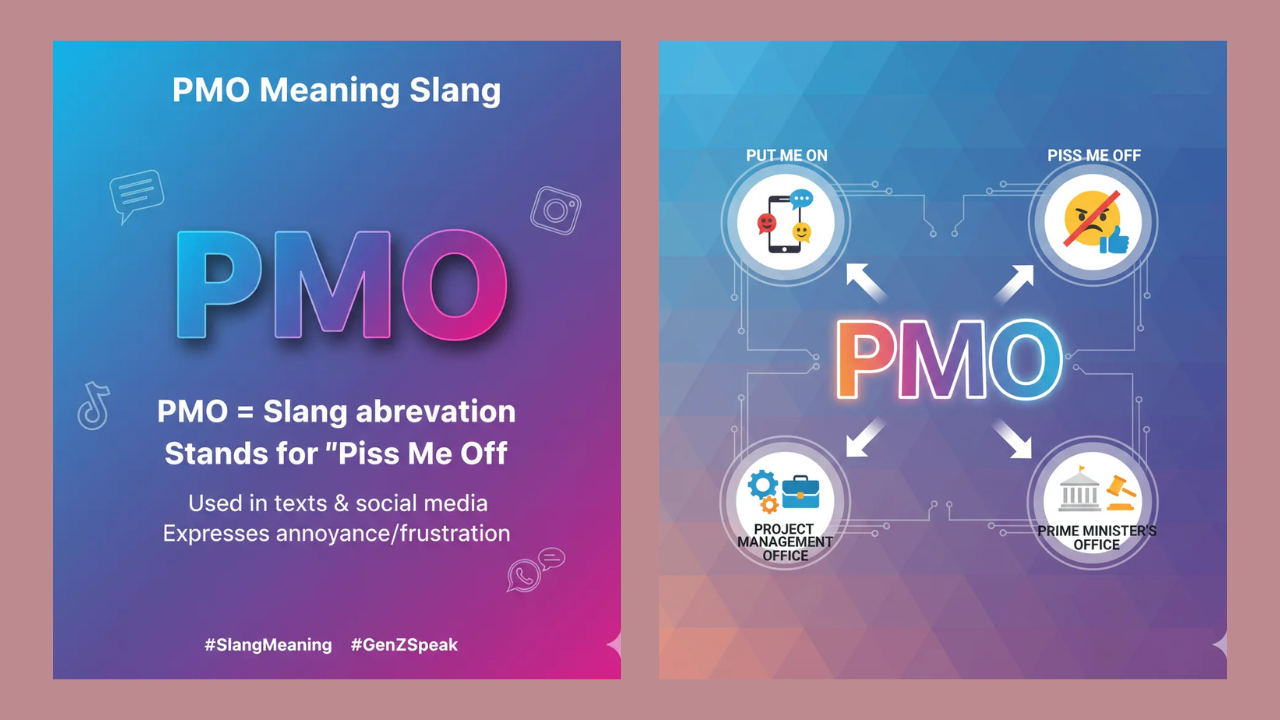
Understanding PMO in Modern Digital Communication
Digital communication has reshaped how people talk to one another every day. Rather than typing out complete sentences, many users lean on short acronyms that keep conversations moving and fit the rapid rhythm of online spaces. These shortcuts arise from social media trends, everyday texting habits, and shared digital experiences. PMO naturally fits this style of communication because it allows people to convey a feeling or ask for something with minimal effort. What makes PMO especially interesting is that it doesn’t stick to a single definition. Its meaning shifts depending on the message’s tone, the situation, and the relationship between the people involved.
PMO tends to show up most often in relaxed, informal conversations, particularly between friends or people who are already comfortable with one another. You’re unlikely to see it used in formal writing or professional settings unless it refers to something entirely different outside of slang. In everyday digital chats, PMO is a good example of how language naturally shifts and adapts through repeated online use. As these shortcuts circulate, they become second nature within specific age groups or online circles, even though they can still feel confusing or unfamiliar to anyone on the outside.
The Most Common PMO Meaning in Text
One of the most common uses of PMO in text messages is as a shorthand for “piss me off” or “pissing me off.” In this sense, it acts as a quick outlet for frustration or irritation. Rather than spelling out precisely what went wrong or why they’re annoyed, people use PMO to sum up their mood in just a few letters. It’s an easy, efficient way to express annoyance in the moment, especially when emotions are running high, and there’s no desire to explain every detail.
PMO Meaning in Slang as “Put Me On”
Another everyday slang meaning of PMO is “put me on,” which carries an entirely different tone from the frustration-based version. In this context, the phrase is usually neutral or even positive. When someone uses PMO this way, they’re asking to be filled in, given a recommendation, or introduced to something they find interesting. It’s essentially a way of saying, “tell me more” or “include me,” and it reflects curiosity rather than annoyance.
In casual conversation, “put me on” is a relaxed way of saying “tell me about it,” “share that with me,” or “hook me up with the details.” PMO is simply an abbreviation of that idea. People often use it when they come across something interesting and want to learn more, whether it’s a place, a helpful resource, or something new that caught their attention. The tone of this usage is generally open and friendly, driven by curiosity rather than negativity.
Why PMO Has More Than One Meaning
PMO has more than one meaning, mainly because online slang naturally evolves. Digital language is fluid, and acronyms often get picked up, reused, and reshaped by different communities over time. It’s not unusual for the same letters to stand in for multiple phrases, especially when those phrases are already part of everyday speech. PMO works so well because it can quickly express either a feeling or a request, with the intended meaning becoming clear through how and when it’s used.
Examples of PMO in Real Text Conversations
To really grasp the meaning of the PMO, it helps to look at how the term shows up in everyday conversations. When PMO is being used to express frustration, it’s usually paired with complaints or negative situations. Someone might describe an ongoing issue or repeated inconvenience and then include PMO in the message to make their annoyance clear without spelling it out in detail.
Tone and Context: The Key to Interpretation
Tone makes all the difference when trying to understand what PMO means in a message. When it comes from a place of frustration, it’s usually accompanied by complaints, negative language, or signs of stress. On the other hand, a curious or enthusiastic tone often uses upbeat language or direct questions. Small details like emojis, punctuation, and sentence structure usually provide extra clues. A frustrated PMO might appear alongside tired or annoyed expressions, while an interested PMO is more likely to be paired with excitement or curiosity.
When PMO Can Cause Confusion
Since PMO can mean different things, misunderstandings can happen when there isn’t enough context. A brief message with no added detail can leave the reader unsure of what was intended. This becomes even more likely for people who aren’t familiar with current slang or who come from different age groups or cultural backgrounds. What feels clear to one person may be confusing or misleading to someone else.
When there’s any doubt about what someone means, the easiest solution is to ask for clarification. A quick follow-up question can clear things up and help the conversation continue without awkwardness. While slang is designed to make communication faster and easier, it should never come at the expense of being understood.
Using PMO Appropriately in Your Own Messages
If you decide to use PMO in your own messages, it helps to think about who you’re talking to. With friends or peers who are comfortable with slang, it can feel natural and expressive. But using it with someone unfamiliar with internet shorthand may confuse them or lead them to misunderstand what you’re trying to say.
Paying attention to tone and context helps ensure your message comes across as you intend. If there’s any chance of confusion, writing out the whole phrase can be the safer choice. Slang is most effective when everyone involved understands what it means and how it’s being used.
Conclusion
Read More: NewsDetects.
Add a Comment